
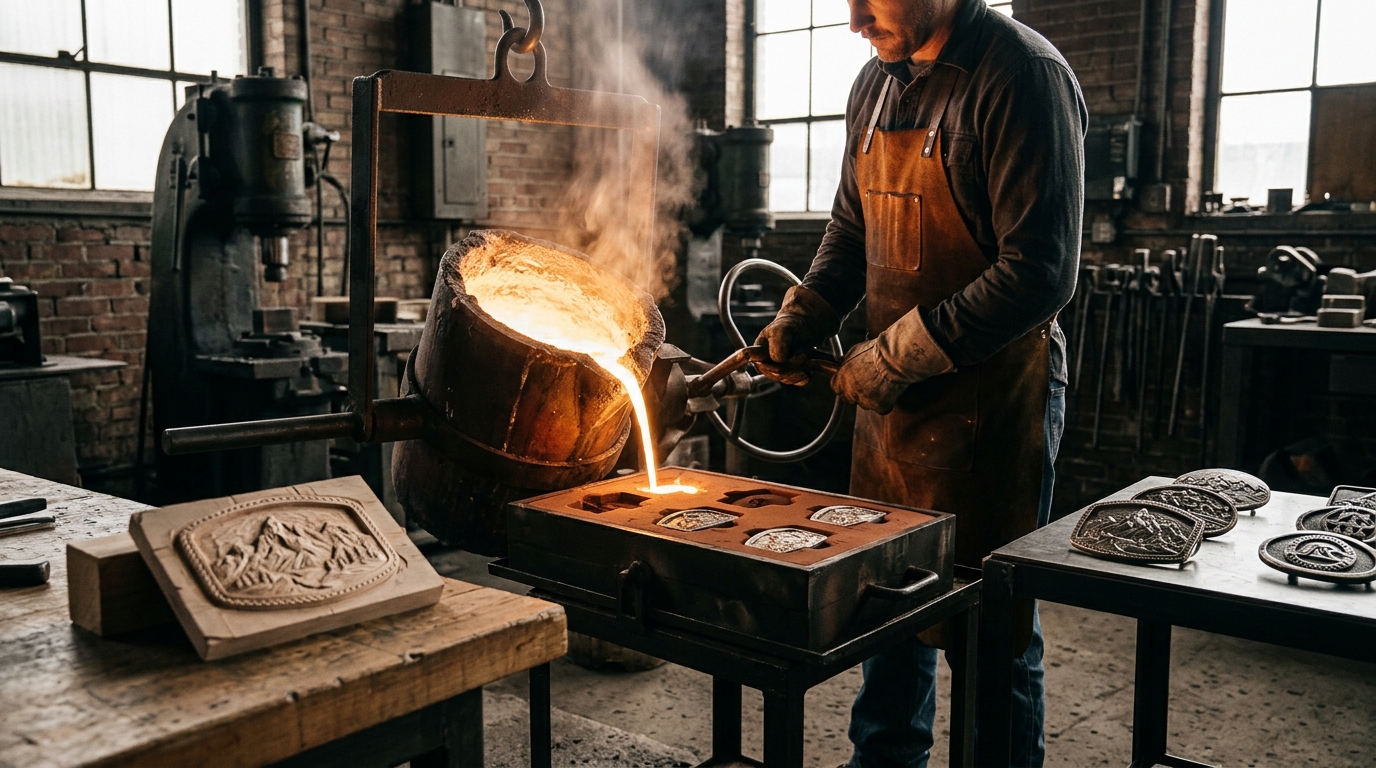
Custom belt buckles are not mass-produced in generic factories. They are precision-engineered components created by specialized foundries that utilize advanced metal casting techniques. According to industry data on custom metal fabrication, the global market for personalized metal goods has seen consistent growth, driven by demand for durable, high-fidelity branding and personal expression. This guide details the specific manufacturing processes, material science, and vendor selection criteria required to produce professional-grade custom buckles. (customer)
The Manufacturing Process: From Design to Metal
The creation of a custom belt buckle is a multi-stage engineering process. It begins with a digital or physical prototype and ends with a polished, durable metal component. The core technology used by top-tier manufacturers is die casting. This process involves forcing molten metal into a custom-made mold under high pressure.
Die casting allows for intricate details to be captured with extreme precision. Unlike sand casting, which is often used for larger, rougher industrial parts, die casting produces smooth surfaces and sharp edges. This is critical for belt buckles, where branding logos, text, and decorative patterns must be legible and crisp.
Step 1: Mold Creation
The first step is the fabrication of the steel mold. This mold is machined to exact specifications based on the client's design. The cost of the mold is a one-time expense that ensures consistency across thousands of units. For small batches, manufacturers may use aluminum molds, which are cheaper but wear out faster. For large-scale production, hardened steel molds are required to withstand the heat and pressure of repeated casting cycles.
Step 2: Metal Injection
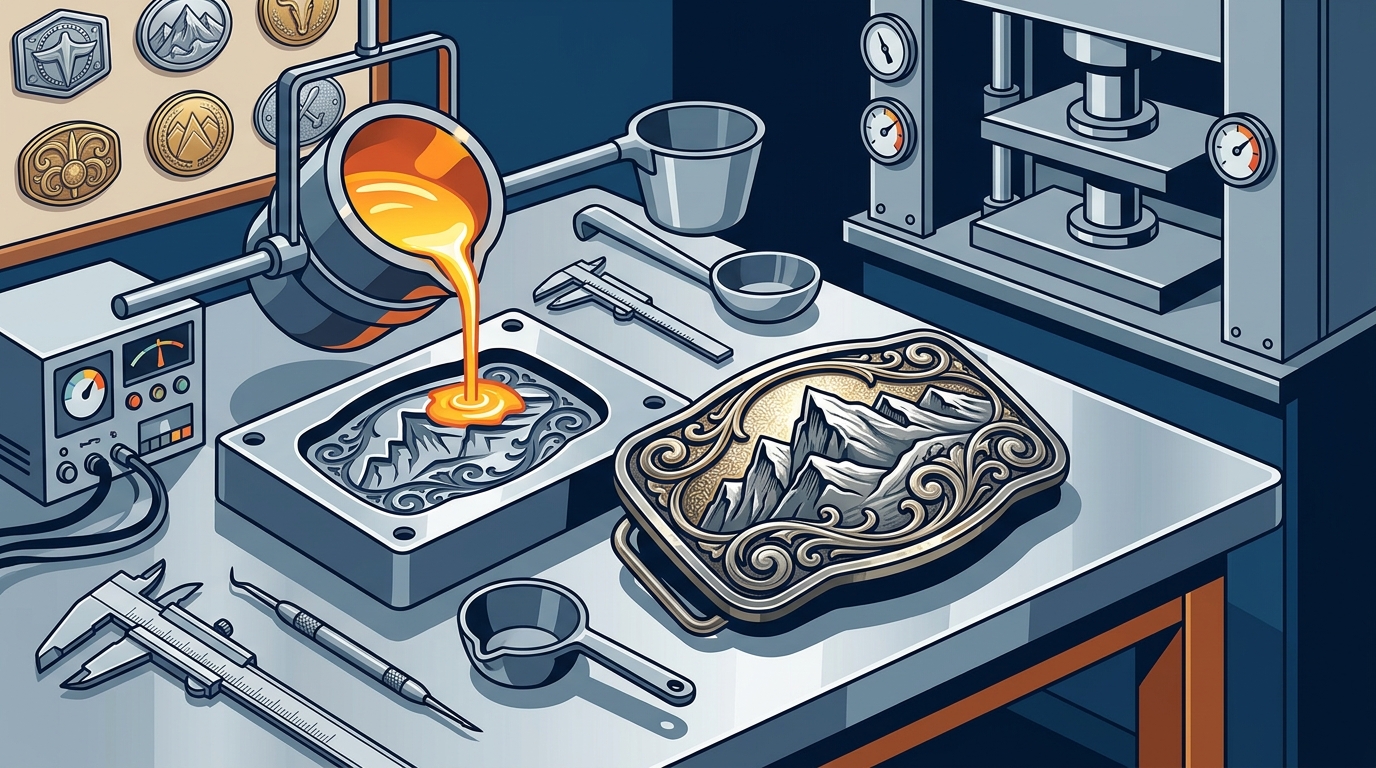
Once the mold is ready, the casting process begins. The metal is heated until it reaches a liquid state. It is then injected into the mold cavity. The pressure forces the metal to fill every nook and cranny of the design. This stage determines the structural integrity of the buckle. A well-executed cast has minimal porosity and strong mechanical properties.
Step 3: Trimming and Polishing
After cooling, the buckle is removed from the mold. It still has excess metal attached, known as flash and sprues. These are trimmed away using specialized machinery. The surface is then polished to remove any rough edges or mold lines. This preparation is essential before any plating or finishing is applied.
Material Selection: Zinc, Brass, and Aluminum
The choice of material significantly impacts the weight, durability, and aesthetic of the final buckle. Zinc alloy is the most common material for custom belt buckles due to its excellent flow characteristics and cost-effectiveness. It is heavy enough to feel substantial but lightweight enough for daily wear.
Zinc Alloy Die Casting
Zinc alloy, often referred to as Zamak, is preferred for its ability to capture fine details. It is also highly resistant to corrosion when properly plated. The density of zinc gives the buckle a premium feel that customers associate with quality. Manufacturers like Mountain Medallion specialize in high-precision zinc casting for custom projects.
Brass and Bronze
For a more traditional or antique look, brass and bronze are excellent choices. These materials are naturally corrosion-resistant and develop a unique patina over time. However, they are more difficult to cast than zinc due to their higher melting points. They are often used for high-end, limited-edition buckles where the material itself is a selling point.
Aluminum
Aluminum is used when weight reduction is a priority. It is significantly lighter than zinc or brass. While it is not as dense, it offers good strength-to-weight ratios. Aluminum buckles are often anodized to add color and additional corrosion resistance. This option is popular for outdoor and tactical gear.
The Role of Professional Design Services
Translating a concept into a manufacturable design requires specialized expertise. Design services bridge the gap between creative vision and industrial production. A professional designer ensures that the artwork is optimized for the casting process.
Artwork Optimization
Not all digital artwork can be directly converted into a mold. Designers must adjust line weights, add draft angles, and ensure that small details are large enough to be cast. This process, known as design for manufacturing (DFM), prevents costly errors and ensures the final product matches the original intent.
3D Modeling and Prototyping
Before cutting the steel mold, many manufacturers create a 3D model of the buckle. This allows the client to visualize the design from all angles. Some companies offer physical prototypes using 3D printing or soft tooling. This step is crucial for verifying fit, scale, and aesthetic appeal before committing to full production.
For those seeking expert guidance, professional design services can help refine concepts into production-ready files. This collaboration ensures that the final buckle is both beautiful and functional.
Quality Control and Finishing Standards
Quality control is the final barrier between a mediocre product and a premium one. Every buckle must meet strict tolerances for dimensions, weight, and surface finish. Finishing is the process of applying coatings to enhance appearance and durability.
Plating Options
Common plating options include nickel, chrome, gold, and antique brass. These layers are applied through electroplating, which deposits a thin layer of metal onto the surface. The thickness of the plating is measured in microns. Thicker plating offers better wear resistance and longevity.
Enamel and Epoxy Filling
For colorful designs, enamel or epoxy filling is used. Enamel is a glass-based material that is fired at high temperatures. It creates a hard, glossy finish. Epoxy is a resin-based alternative that is cured at lower temperatures. It is often used for vibrant, multi-color designs. Both methods require precise masking to keep the plating clean and sharp.
Inspection Protocols
Top manufacturers implement rigorous inspection protocols. This includes visual checks for defects, dimensional verification with calipers, and adhesion tests for plating. Any buckle that fails to meet these standards is rejected. This commitment to quality ensures that customers receive products that are both durable and visually appealing.
How to Choose the Right Manufacturer
Selecting the right manufacturer is critical for the success of your custom buckle project. Consider the following factors when evaluating potential partners.
Experience and Expertise
Look for manufacturers with a long history in the industry. Experience often correlates with refined processes and better problem-solving capabilities. Companies that have been operating for decades, such as Mountain Medallion, have likely encountered and solved a wide range of manufacturing challenges.
Domestic vs. Overseas Production
Domestic manufacturing offers advantages in communication, quality control, and intellectual property protection. American-made castings, for example, adhere to strict labor and environmental standards. While overseas production may offer lower unit costs, it often involves longer lead times and higher shipping costs. For high-quality custom work, domestic production is often the preferred choice.
Minimum Order Quantities (MOQs)
MOQs vary significantly between manufacturers. Some companies cater to large corporations with high-volume needs, while others specialize in small-batch production. If you are a startup or a small business, look for a vendor with flexible MOQs. This allows you to test the market without a massive upfront investment.
Customer Support and Communication
Effective communication is essential for a smooth project lifecycle. Choose a manufacturer that provides dedicated account managers and responsive support. They should be able to answer technical questions quickly and provide regular updates on production status.
Key Takeaways
- Die Casting is Standard: High-quality custom buckles are primarily produced using die casting for precision and detail.
- Material Matters: Zinc alloy is the most popular choice due to its balance of cost, weight, and detail retention.
- Design Optimization: Professional design services are crucial for translating concepts into manufacturable 3D models.
- Finishing Options: Plating and enamel filling significantly enhance the aesthetic and durability of the final product.
- Vendor Experience: Choose manufacturers with a proven track record, such as those established since 1999, for reliable quality.
- Domestic Production: American-made castings offer superior quality control and intellectual property protection.
- MOQ Flexibility: Many specialized foundries accommodate small-batch orders for startups and niche brands.
Frequently Asked Questions
What is the most common material for custom belt buckles?
Zinc alloy is the most common material because it offers excellent detail retention, durability, and cost-effectiveness for mass production.
How long does it take to produce custom belt buckles?
Production time varies based on order size and complexity. Typically, mold creation takes 2-3 weeks, and production runs can take an additional 2-4 weeks.
Can I get a small batch of custom buckles?
Yes, many specialized manufacturers offer low minimum order quantities (MOQs) to accommodate startups and small businesses.
What is the difference between die casting and sand casting?
Die casting uses high pressure to inject metal into a steel mold, resulting in smoother surfaces and finer details. Sand casting is less precise and is typically used for larger, rougher parts.
How do I protect the plating on my custom buckle?
Proper plating thickness and clear coat protection are essential. Avoid exposing the buckle to harsh chemicals and store it in a dry environment to prevent corrosion.
Do you offer design services for custom buckles?
Yes, professional design services are available to help optimize your artwork for manufacturing and create 3D models for approval.
What is the cost of a custom mold?
Mold costs vary based on complexity and size. They are a one-time expense that ensures consistency across your production run.
Start Your Custom Project
Creating high-quality custom belt buckles requires a partner who understands both the art of design and the science of manufacturing. Whether you need a small batch for a special event or a large-scale production run for your brand, choosing the right manufacturer is essential. Contact Mountain Medallion today to discuss your project. We specialize in quality custom American-made castings and are ready to bring your vision to life with precision craftsmanship.