

Custom metal casting is a complex manufacturing process that demands precision, material expertise, and rigorous quality control. According to industry data, manufacturing efficiency directly correlates with the reliability of supply chain partners. Selecting the wrong vendor can lead to costly delays, defective parts, and compromised brand reputation. This guide outlines the essential criteria for evaluating potential partners. (https mountainmedallion com customer)
The Advantage of Domestic Manufacturing
One of the most significant decisions in sourcing custom castings is choosing between domestic and international suppliers. Domestic manufacturing offers distinct advantages in terms of communication, intellectual property protection, and supply chain resilience. U.S. manufacturing output has shown consistent growth in high-precision sectors, driven by advanced automation and skilled labor. (https mountainmedallion com customer)
Working with a domestic vendor like Mountain Medallion ensures that your designs remain secure within U.S. borders. This reduces the risk of intellectual property theft, which is a growing concern in global supply chains. Additionally, domestic production eliminates the unpredictability of international shipping delays and customs inspections. For businesses requiring tight turnaround times, local manufacturing provides the agility needed to respond to market changes.
Furthermore, domestic vendors often adhere to stricter environmental and labor regulations. This compliance not only mitigates legal risks but also aligns with corporate social responsibility goals. When evaluating vendors, ask about their facility location and labor practices. A transparent supply chain is a hallmark of a reputable manufacturer.
Evaluating Design and Engineering Support
Custom casting is not just about pouring metal; it is about translating a concept into a manufacturable design. Many clients start with a sketch or a rough idea. A capable vendor should offer robust design services to help refine these concepts. This includes 3D modeling, prototyping, and engineering analysis.
Look for a vendor who can identify potential manufacturing issues before production begins. For example, they should assess draft angles, wall thickness, and gate placement to ensure the final part meets quality standards. A vendor with in-house engineering can suggest modifications that reduce cost without compromising aesthetics or function.
Consider the vendor's portfolio of past work. Do they have experience with similar geometries and materials? A vendor who specializes in intricate details, such as medallions or lapel pins, will bring a different level of precision than one focused on heavy industrial castings. Ensure their expertise aligns with your specific project requirements.
Quality Control and Certification Standards
Quality control is the backbone of any successful casting operation. A reputable vendor should have a documented quality assurance process that includes inspection at every stage of production. This might involve dimensional checks, surface finish analysis, and material testing.
Ask about the vendor's certification status. While specific certifications vary by industry, many high-quality manufacturers adhere to ISO standards. These standards ensure that the vendor has consistent processes for managing quality and customer satisfaction. ISO 9001 certification is a widely recognized benchmark for quality management systems.
Transparency in quality reporting is also crucial. A good vendor will provide detailed reports on each batch, including test results and inspection photos. This level of documentation helps you verify that the parts meet your specifications and provides a record for your own quality audits.
Material Science and Alloy Selection
The choice of material significantly impacts the cost, durability, and appearance of the final product. Common materials for custom casting include bronze, brass, zinc, and aluminum. Each material has unique properties that make it suitable for specific applications.
Bronze is known for its excellent corrosion resistance and attractive patina, making it ideal for outdoor medallions and architectural hardware. Brass offers a gold-like appearance and is often used for decorative items and electrical components. Zinc is favored for its ability to capture fine details and its cost-effectiveness for high-volume production.
A knowledgeable vendor will guide you through the selection process, considering factors such as mechanical strength, weight, and finish requirements. They should also be able to advise on post-processing options, such as plating, painting, or antiquing, to achieve the desired look.
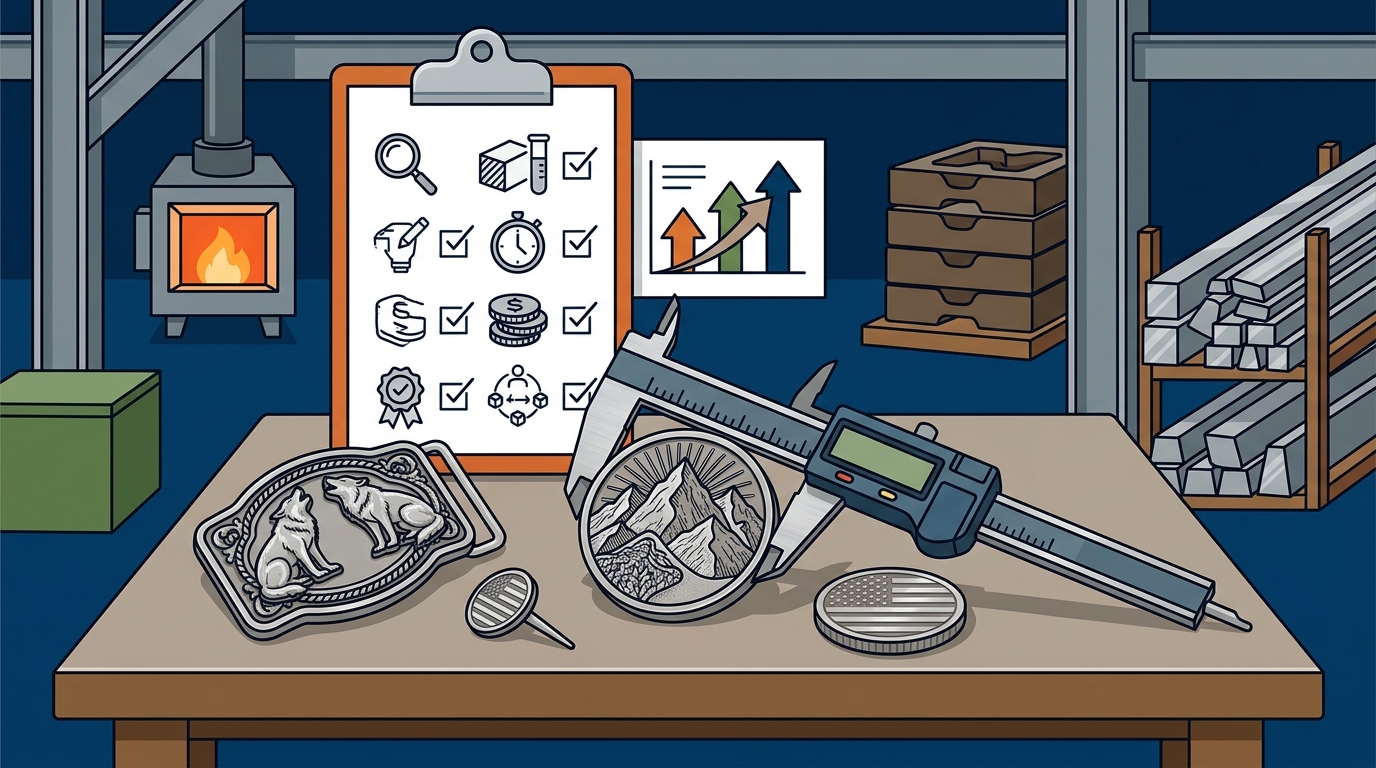
Production Capacity and Scalability
Consider the vendor's ability to handle your order volume, whether it is a small run of prototypes or a large-scale production batch. A vendor with flexible production capacity can accommodate both small and large orders without significant delays.
Scalability is also important for long-term partnerships. As your business grows, your vendor should be able to increase production to meet demand. Ask about their lead times for different order sizes and their ability to rush orders if necessary.
Additionally, inquire about their inventory management practices. A vendor who maintains raw material inventory can reduce lead times and ensure consistent production schedules. This is particularly important for projects with tight deadlines.
Understanding Pricing and Cost Structures
Pricing in custom casting is influenced by several factors, including material costs, labor, tooling, and finishing. It is important to understand the breakdown of these costs to make an informed decision.
Tooling costs, such as mold creation, are typically one-time expenses. However, they can be significant for complex designs. Some vendors may offer tooling credits for large orders, which can reduce the overall cost. Be sure to ask about these options during the quoting process.
Unit pricing usually decreases as order volume increases due to economies of scale. However, the difference may not be linear. Request detailed quotes for different order quantities to understand the cost implications. Global inflation trends have impacted material costs, so ask about price stability and adjustment clauses in contracts.
Communication and Project Management
Effective communication is essential for a successful project. A good vendor will assign a dedicated project manager to your account, ensuring clear and consistent communication throughout the process.
Look for a vendor who provides regular updates on production status and proactively addresses any issues. They should be responsive to questions and willing to collaborate on solutions. A vendor who listens to your needs and provides expert advice is a valuable partner.
Consider the vendor's customer service policies. Do they offer a satisfaction guarantee? What is their process for handling defects or disputes? A vendor with a strong reputation for customer service will go the extra mile to ensure your satisfaction.
Key Takeaways
- Domestic Manufacturing: Choose U.S.-based vendors for IP protection and supply chain reliability.
- Design Support: Ensure the vendor offers in-house engineering and 3D modeling services.
- Quality Control: Verify ISO certifications and detailed inspection reporting processes.
- Material Expertise: Select a vendor with deep knowledge of bronze, brass, and zinc alloys.
- Scalability: Confirm the vendor can handle both prototype and high-volume production.
- Transparent Pricing: Request detailed quotes including tooling and unit costs.
- Communication: Prioritize vendors with dedicated project managers and responsive support.
Frequently Asked Questions
What is the typical lead time for custom castings?
Lead times vary based on order complexity and volume. Small prototype runs may take two to four weeks, while large production orders can take six to eight weeks or more. Mountain Medallion provides estimated timelines during the quoting process.
Do you offer design services for new projects?
Yes, we offer comprehensive design services to help bring your ideas to life. Our team can create 3D models and provide engineering feedback to optimize your design for manufacturing.
What materials do you specialize in?
We specialize in a wide range of metals, including bronze, brass, zinc, and aluminum. Our team can help you select the best material for your specific application and aesthetic requirements.
How do you ensure quality control?
We implement a rigorous quality control process that includes dimensional inspection, surface finish analysis, and material testing. We provide detailed reports for every order to ensure transparency and accountability.
Can you handle large production runs?
Yes, we have the capacity to handle both small and large production runs. Our flexible manufacturing processes allow us to scale production to meet your demand while maintaining consistent quality.
What is your minimum order quantity?
We accommodate a wide range of order sizes, from small prototype runs to large production batches. Contact us for a quote to discuss your specific needs and requirements.
Do you offer international shipping?
While we are a U.S.-based manufacturer, we can arrange shipping to international locations. However, we recommend working with domestic partners to minimize logistics complexities and ensure faster delivery.
Ready to Start Your Project?
Choosing the right custom casting vendor is a critical decision that impacts the success of your product. By evaluating vendors based on manufacturing location, design support, quality control, material expertise, production capacity, pricing, and communication, you can ensure a successful partnership.
Mountain Medallion has been providing quality custom American-made castings since 1999. We invite you to contact us to discuss your project and receive a personalized quote. Let us help you bring your vision to life with precision and craftsmanship.